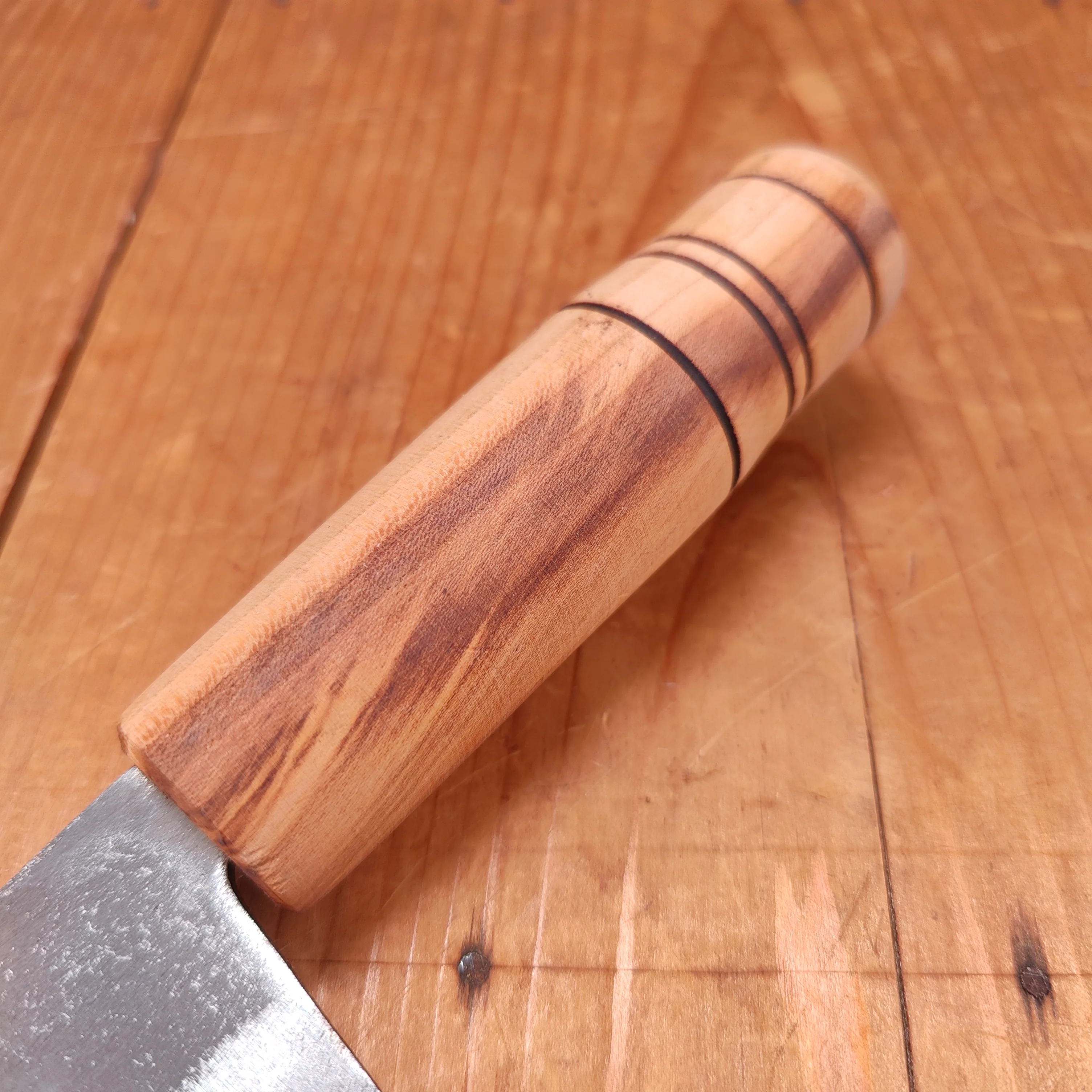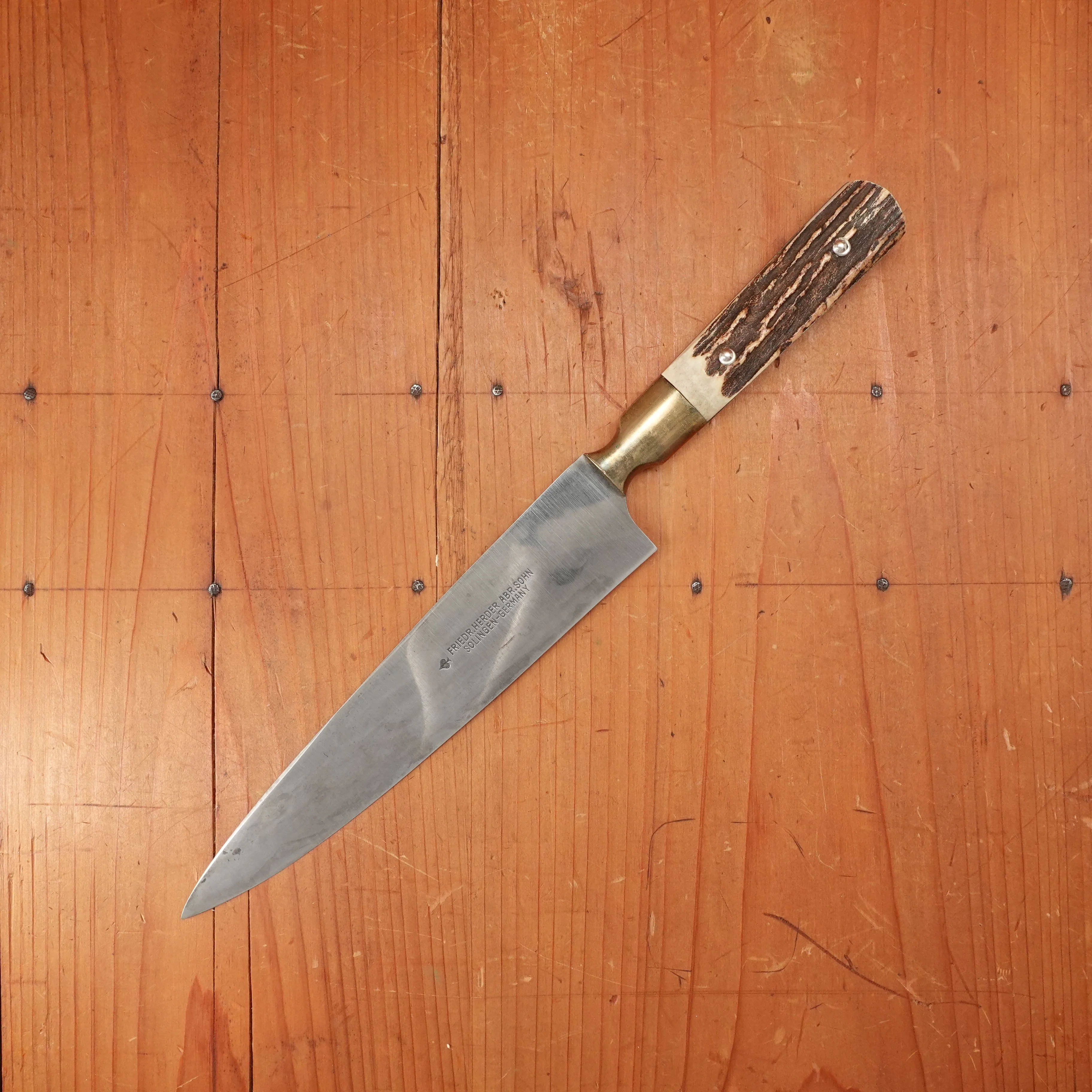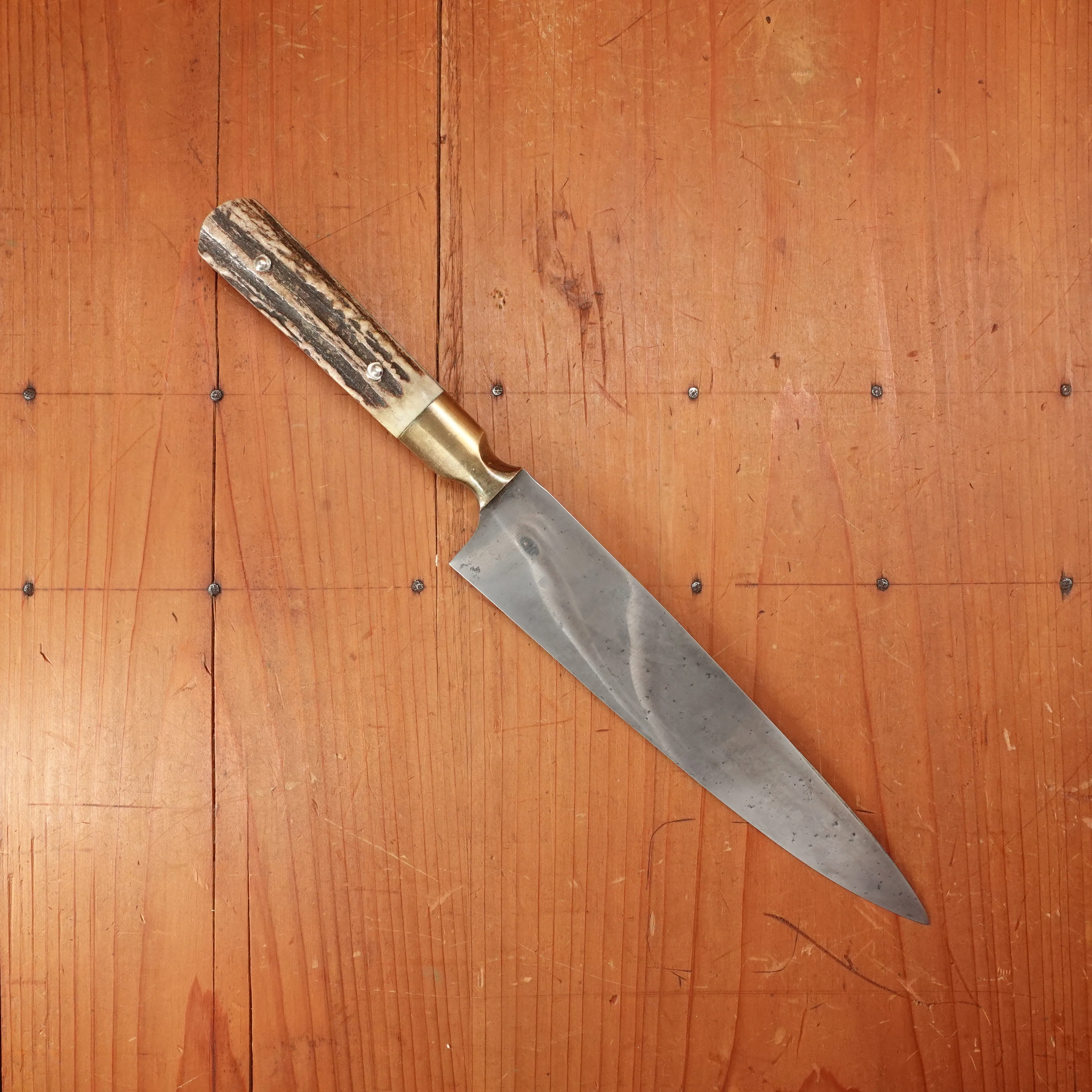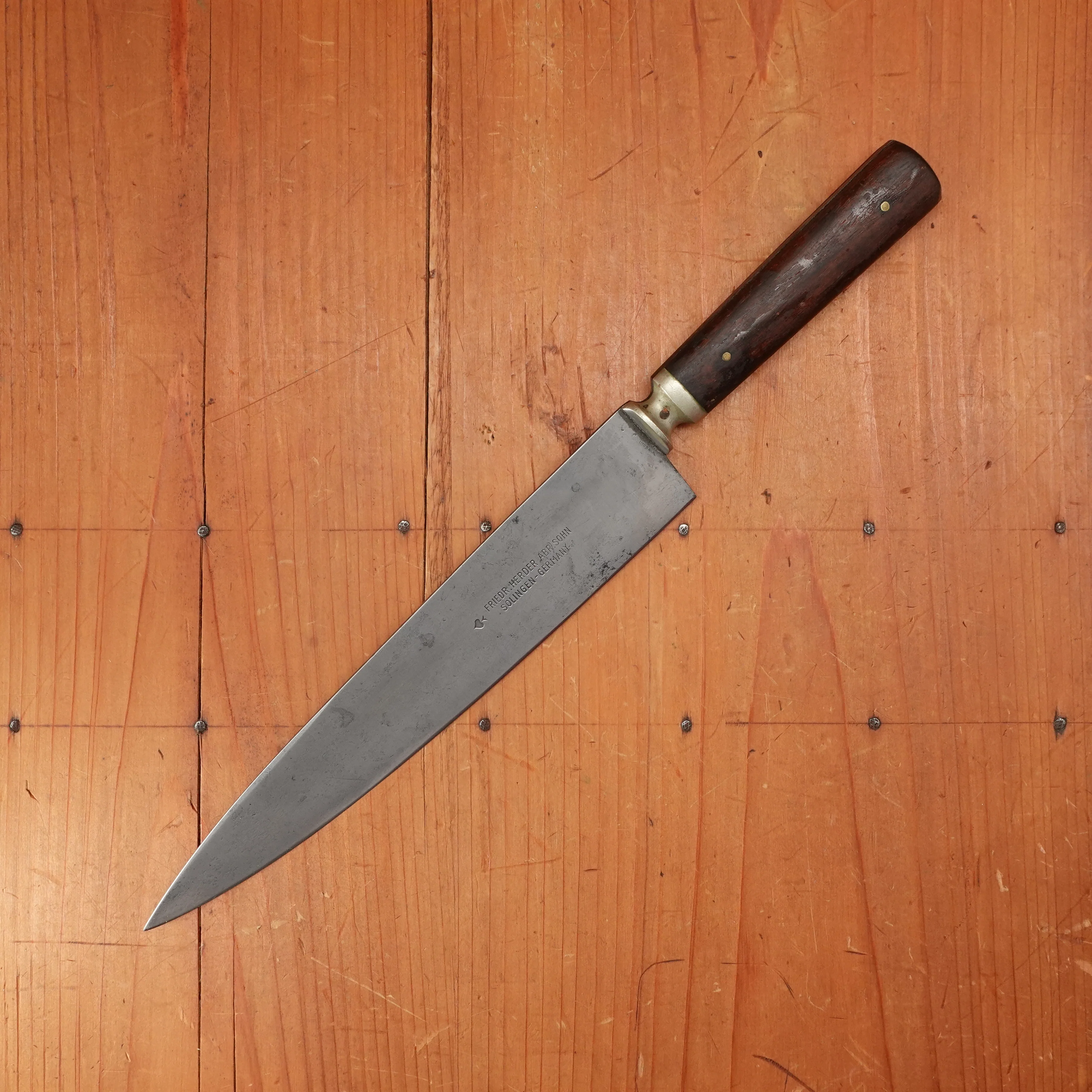
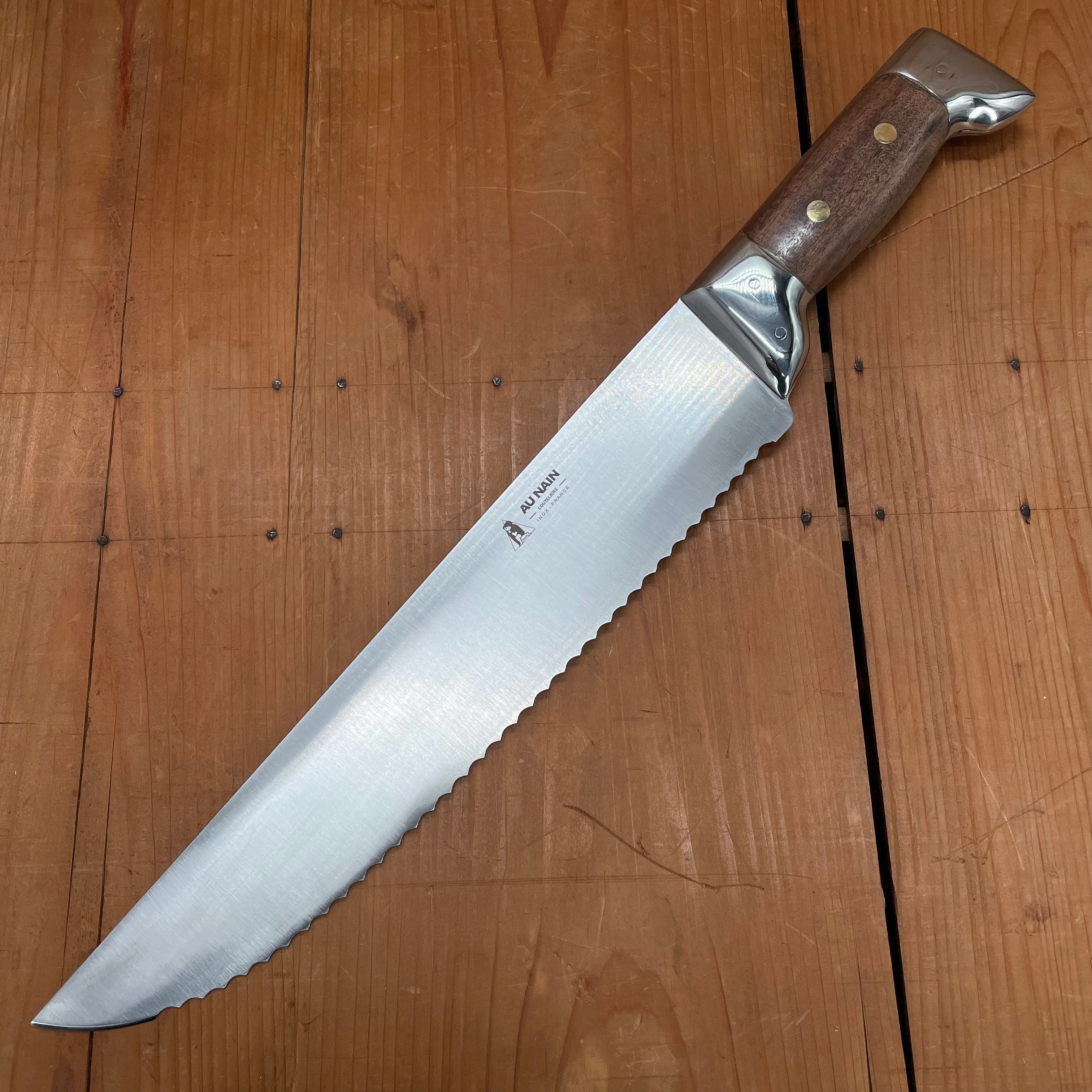
Au Nain 13" Fish Monger Boucher with 2 Bolsters
Epic new production Fish Monger Boucher- not much has changed in the design from the New Old Stock 50s-60s grandfather version of this new production knife from Au Nain.
French 'boucher' butcher knives are used similarly to a scimitar or bullnose butcher knives; large cuts, slicing chops and steaks. The design of this knife dates back to the middle ages and is still used extensively in southern Europe and France.
Au Nain is a 4th generation family cutlery business that was founded in 1885 by Gaston Saint-Joanis in Saint-Rémy-sur-Durolle, near Thiers. The name 'Au Nain' (meaning The Dwarf) was chosen as a playful response to their main competitor at that time - 'Géant du Couteau' (The Knife Giant). Much of Au Nain's manufacturing process is still in-house (from handling to polishing and sharpening, etc.) which is becoming less and less common. They continue to uphold traditional knife making processes characteristic to Thiers.
Original: $158.00
-65%$158.00
$55.30Product Information
Product Information
Shipping & Returns
Shipping & Returns
Description
Epic new production Fish Monger Boucher- not much has changed in the design from the New Old Stock 50s-60s grandfather version of this new production knife from Au Nain.
French 'boucher' butcher knives are used similarly to a scimitar or bullnose butcher knives; large cuts, slicing chops and steaks. The design of this knife dates back to the middle ages and is still used extensively in southern Europe and France.
Au Nain is a 4th generation family cutlery business that was founded in 1885 by Gaston Saint-Joanis in Saint-Rémy-sur-Durolle, near Thiers. The name 'Au Nain' (meaning The Dwarf) was chosen as a playful response to their main competitor at that time - 'Géant du Couteau' (The Knife Giant). Much of Au Nain's manufacturing process is still in-house (from handling to polishing and sharpening, etc.) which is becoming less and less common. They continue to uphold traditional knife making processes characteristic to Thiers.